Friday, August 14, 2015

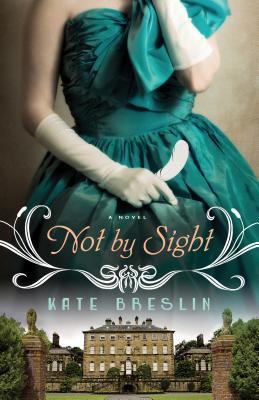
Not By Sight book review

Not by Sight

Not by Sight

by
 
Gripping Sophomore Novel from a Rising Historical Romance Talent

With Britain caught up in WWI, Jack Benningham, heir to the Earl of Stonebrooke, has declared himself a conscientious objector. Instead, he secretly works for the Crown by tracking down German spies on British soil, his wild reputation and society status serving as a foolproof cover.

Blinded by patriotism and concern for her brother on the front lines, wealthy suffragette Grace Mabry will do whatever it takes to assist her country's cause. When she sneaks into a posh London masquerade ball to hand out white feathers of cowardice, she never imagines the chain of events she'll set off when she hands a feather to Jack.

And neither of them could anticipate the extent of the danger and betrayal that follows them--or the faith they'll need to maintain hope.


My Review: 6/10 stars

Just a quick shoutout to Bethany House, who always does such a beautiful job on their covers. 

Admittedly my first impression left me apprehensive; there is intense attraction at first sight. That's fine, but the fact that our heroine is described as an "exotic beauty" who makes him forget everything going on around him, and our hero is stunning with his classic good looks... it's just a turn off for me. Why does every historical love match have to be based on looks? Or if it's not, then they fall in love for other reasons, but thankfully, both characters just happen to be gorgeous. One of my favorite things about Pride and Prejudice is that Darcy is not impressed by Elizabeth's reputed beauty. Eventually his opinion of her looks changes, but over time, and in correlation to the growth of his love of her intelligence and spirit.

Thankfully, Grace was more than her looks and her progressive heart. She was a woman of strong faith who had learned or been taught to be sensitive to whispers from the Holy Spirit, stopping herself in her tracks of impulsive human nature, choosing to act in compassion and mercy rather than retaliation and vindication. That is really hard to do, especially in the moment. I thought many of the examples were really well done.

Grace's personal struggles and challenges to her faith seemed pretty minor compared to the other characters', but I loved that one of her problems was not practicing what she preached:

"Returning to her own bed, and the guilt about Jack still weighing on her, Grace's smile faded. No sin is greater than his mercy. Why couldn't she take her own advice?"

I just loved that moment, that awareness, that honesty. It is so much easier to discern where others are struggling and simply tell them where they're wrong. It is so much harder to put that knowledge into practice in our own lives.

The plot was fast paced and the history embedded in the pages was transportive. But for me there were two major issues that detracted from an otherwise great story:

*minor spoilers*

First, Grace wins everyone over and easily solves their complex problems. Totally unrealistic and not a good standard to set if you ask me. I don't believe that everyone would offer up their secrets and struggles so readily, because frankly, any resistance they initially put up was half-hearted at best. And even though, at the end of the book, there seems to be some setbacks with Grace's provided solutions, even those are almost immediately resolved with new-and-improved remedies. It was just too easy. I can't relate to a character that every single person likes and who has a ready answer to everyone's problems. In fact, I would be the one to dislike them on those facets of their personality alone. If everyone likes you, something's wrong. ("For am I now seeking the approval of man, or of God? Or am I trying to please man? If I were still trying to please man, I would not be a servant of Christ." Galatians 1:10 ESV) It would make me suspicious to say the least.

Secondly, and more importantly, I had a big problem with the romance. This setup was really not okay. Grace may not have been promised to someone, but she was cultivating a relationship with an engaged man. I don't care that neither party really wanted it. Until they ended that engagement, they were bound. And they had no business pursuing other people in the meantime. As Jack had no pretenses to moral obligation or faith, his behavior was not really surprising. It was Grace I took issue with, Grace who knew better. I was really surprised that the laws of propriety were not an issue in 1917 and she was able to chauffer Jack every day for three hours, unchaperoned. And what was she doing having a private dinner with an engaged man, especially after a friend called her out? She did not guard her heart or keep things professional at all. She acted like she had no control over her heart or her actions, when the Bible teaches us that both are governed by our choices.

What is worse is that I felt like this book perpetuates a lot of the lies women tell themselves when they begin an affair: "I just couldn't help it, he's the one." False. You could help it. And he is not yours, actually, but hers. "The marriage is basically over." False. It's not over until the papers are signed and they've moved out. "You don't understand, his girlfriend/fiancee/wife..." False. There is no act that justifies cheating. "They're not in love anymore." False. Love is a choice. And you don't know how she feels or what he's telling her.

Grace ignores the wise counsel of another Christian woman and openly acknowledges that she's giving in to temptation with a man bound to another. People make mistakes. My problem was that their whole relationship was wrong and it was not acknowledged as a sinful mistake, it was not used as a lesson to demonstrate the deceitful nature of the heart, or to warn others, no it was touted as a romantic love story with a happy ending. God can bring beauty out of ashes. But it certainly was concerning to me that this book seemed to promote setting fire to integrity and fidelity.

Oh, and it was a very minor thing, but Grace is always inwardly lamenting that whatever she did would aid the war, and the sooner the war was won, the sooner Colin could come home. Pretty much those words exactly. Over and over, like a chant, a never ending mantra. That may be a realistic aspect of her character, but it was annoying for me, as the reader.

In the end, this wasn't the book for me and I wouldn't feel good about recommending it. However, I have hope for future novels by this author.

Monday, July 27, 2015

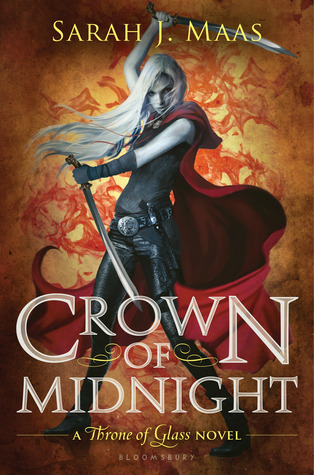
Crown of Midnight (Throne of Glass #2) book review

Crown of Midnight (Throne of Glass, #2)

Crown of Midnight (Throne of Glass #2)

by
 
"A line that should never be crossed is about to be breached.

It puts this entire castle in jeopardy—and the life of your friend."


From the throne of glass rules a king with a fist of iron and a soul as black as pitch. Assassin Celaena Sardothien won a brutal contest to become his Champion. Yet Celaena is far from loyal to the crown. She hides her secret vigilantly; she knows that the man she serves is bent on evil.

Keeping up the deadly charade becomes increasingly difficult when Celaena realizes she is not the only one seeking justice. As she tries to untangle the mysteries buried deep within the glass castle, her closest relationships suffer. It seems no one is above questioning her allegiances—not the Crown Prince Dorian; not Chaol, the Captain of the Guard; not even her best friend, Nehemia, a foreign princess with a rebel heart.

Then one terrible night, the secrets they have all been keeping lead to an unspeakable tragedy. As Celaena's world shatters, she will be forced to give up the very thing most precious to her and decide once and for all where her true loyalties lie... and whom she is ultimately willing to fight for.


My review: 6/10

The first 80% of this book was a 4 star. I was so disappointed. And then, the last 75 pages or so was a 10 star. What? Yes. I've ended this book feeling both disappointed and hopeful.

The thing about labeling your main (female) character an assassin... it's not a title that you just use to make them seem hard or badass. First the physical, an assassin should have razor sharp senses and reflexes, a strong ability and desire to blend in, be anonymous. They should be cool, calm, deadly focused. If emotions take over the drive, that's when mistakes are made. An assassin needs to be all of these things, or else they would likely be killed from a botched attempt before they earned the title. I would suspect that an accomplished assassin would have learned to be very suspicious, frequently on edge, after seeing what they saw. They would be extremely guarded emotionally.

Celaena was everything an assassin is NOT. I couldn't even believe it.

SPOILERS:

Let's start with Davis' office. She seriously waltzed into that situation, where she intended to be sneaking and spying, very conspicuously dressed in movement-impeding clothes. Why not have something on underneath and shed the dress when needed? I would think her mind would be working on exit strategies first and foremost in every situation she finds herself in.

Moving on to Chaol, who is quickly built up as the most important person in Celaena's life, ever. He is everything. Then, all of a sudden, he is not. Nehemia is everything, and because he didn't tell her that he'd heard of a threat to Nehemia and that the King planned to question her, now Chaol is the enemy. What? This doesn't even make any sense. I thought Chaol was your everything? You would prioritize his safety over everyone else's. If the king had decided Nehemia was a traitor and ordered Chaol, his CAPTAIN of the guard, to execute her, what would she expect/want him to do then? Be executed himself? Of course not. Not only does the flip make no emotional sense, it makes no logical sense.

Celaena just busts into that warehouse in an emotional rage, annihilating everything in her path. She doesn't think or collect information before acting. You would think she would have learned from what apparently happened with Sam and would have learned not to act rashly, emotionally. But no, she just bursts in there intent on destruction. She was not clever, she was not wise, she was not stealthy, she was just stupid.

While troubling, I didn't think Chaol's withholding that information was such a big deal. It's not like he'd known Nehemia would be killed. Celaena doesn't ask any questions, doesn't think or consider, doesn't listen before turning on him.

The theme for this  story is that Celaena is always two steps behind. It's amazing she wasn't killed. She has no problem divulging her secrets and plans to those she currently considers trustworthy. I was floored. Even if they don't betray you (and she should have had a healthy respect for her mistaken judgments at this point), do you not care that having that kind of information could get them killed?! Why did they need to know? It was so carelss, so sloppy.

The whole Grave thing came out of nowhere. It was unnecessarily disgusting and should have been impossible. How is it that he got into the castle, past all the guards, past Nehemia's personal guards and then had the time to hang around and be "artistic?"

Why, WHY, did Celaena tell Yellowlegs the WHOLE riddle?! She's supposed to be intelligent! If you know that this is a riddle telling you the location of three powerful objects, WHY would you hjust hand that info out?! Why wouldn't you give her a piece of it? Why would you fish for information based on what you did know, asking questions like, what kind of power would it take to open a portal and let in creatures (like the ridderak), how would they get that power? etc.

At that point, I thought this book and its characters were doomed. I forged on, however.

Then, all of a sudden, Celaena transforms. Not into any of the poorly concealed surprise identities (SPOILERS: Fae, heir to the throne of Terrasen... seriously who didn't see that coming from about half way through the first book?) but into the smart, calculating powerhouse she should have been from the beginning. She thinks first, then acts. What a difference it makes.

I will read the next book in the hope that Celaena has been permanently altered and she can now be someone I respect.

Thursday, July 23, 2015

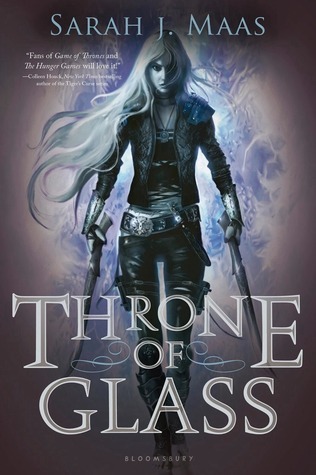
Throne of Glass book review

Throne of Glass (Throne of Glass, #1)

Throne of Glass (Throne of Glass #1)

by
 
In a land without magic, where the king rules with an iron hand, an assassin is summoned to the castle. She comes not to kill the king, but to win her freedom. If she defeats twenty-three killers, thieves, and warriors in a competition, she is released from prison to serve as the king's champion. Her name is Celaena Sardothien.

The Crown Prince will provoke her. The Captain of the Guard will protect her. But something evil dwells in the castle of glass--and it's there to kill. When her competitors start dying one by one, Celaena's fight for freedom becomes a fight for survival, and a desperate quest to root out the evil before it destroys her world.


My Review: 6.5/10
I liked Celaena's brand of flaws. She's a little vain and materialistic. These are character traits that aren't dished out too often in the books I read. This is a book about an assassin, so there is gore and unapologetic violence, but it wasn't extreme, thankfully.

The story was interesting enough to keep me turning pages, but there were some things that got in the way and kept me from really getting lost in the story. I could sense a love triangle brewing, which I'm never a fan of. Sometimes Celaena did stupid and uncharacteristic things. As an assassin, she would have spent all of her training learning how to be invisible, how to blend in. She really needed to be told not to draw atttention to herself in the competition? There were several things like this that kept me from buying into the story that she was the best in the land. She was a little too soft, too vulnerable, too reachable, too soon.

I could see some surprises being set up for later on, so I wasn't shocked when I was supposed to be, etc.

I will continue reading the books in this series because I still think it has potential. But the writing and lack of realistic, hard characters are what kept this book from being one of a kind versus one of many.

Monday, July 20, 2015

The Heart of Betrayal book review

The Heart of Betrayal (The Remnant Chronicles, #2)

The Heart of Betrayal (The Remnant Chronicles #2)

by
 
Intrigue abounds in this hotly anticipated sequel to The Kiss of Deception!

Held captive in the barbarian kingdom of Venda, Lia and Rafe have little chance of escape. Desperate to save her life, Lia's erstwhile assassin, Kaden, has told the Vendan Komizar that she has the gift, and the Komizar's interest in Lia is greater than anyone could have foreseen.

Meanwhile, nothing is straightforward: there's Rafe, who lied to Lia, but has sacrificed his freedom to protect her; Kaden, who meant to assassinate her but has now saved her life; and the Vendans, whom Lia always believed to be barbarians. Now that she lives amongst them, however, she realizes that may be far from the truth. Wrestling with her upbringing, her gift, and her sense of self, Lia must make powerful choices that will affect her country... and her own destiny.

My Review: 8/10

I have little to say about this book that I waited for with bated breath. I can't remember the last time I anticipated a book so much. Maybe Harry Potter. No, it's not in the same league, but just... feelings.

Anyway, though it's not fair to compare Heart of Betrayal to the first book, that's what's about to happen:

The first book built up a lot of mystery and interweaving side stories. Yet I believe it was still a good stand alone novel. This book would not stand strong on its own; it's the classic in-between book in a trilogy. It relies heavily on established relationships and plot layed out in the first book, and works to set up the third book. I think it covers a much smaller time line, so there is little development or growth, and understandbly, Lia does not travel and is a prisoner, so there are few new characters, adventures, or mysteries uncovered.

However, to give due credit, the characters remained consistent. *mild spoilers* This has not ever been a love triangle, though one character's unrequited love seems to make some people disagree, and I appreciate that Ms. Pearson kept Lia solid in her feelings. I love that she was never confused or waivering. I thought some of the risks she took, fueled by her emotions, were too reckless and not worth it, but I wouldn't say it was unbelievable; I remember being stupid in love myself.

I can't wait to see how Lia's story is resolved and to have all the missing pieces of the puzzle finally come together to reveal the history and truth of this world.

Wednesday, July 8, 2015

Irish Meadows By Susan Anne Mason book review

Irish Meadows (Courage to Dream #1)

Irish Meadows (Courage to Dream #1)

by
 
Irish immigrant James O’Leary has spent his life building Irish Meadows into a thriving horse farm and is not about to let hard economic times threaten its success. He intends for his daughters to marry prosperous men–ones who will secure the family’s rightful place in society, and at the same time, guarantee the future of Irish Meadows. Both girls, however, have different visions for their futures.

Brianna and Colleen O’Leary know their father expects them to marry well. Yet despite his wishes, Brianna, the quieter sister, dreams of attending college. Vivacious Colleen, meanwhile, is happy to marry–as long as her father’s choice meets her exacting standards. When stable hand Gilbert Whelan returns from college and distant family member Rylan Montgomery stops in on his way to the seminary in Boston, the two men quickly complicate everyone’s plans. It will take every ounce of courage for both sisters to follow their hearts. And even if they do, will they inevitably find their dreams too distant to reach?


My Review: 7/10

I always get so excited about new authors- I'm always hoping to stumble on a new favorite.

This was a good debut novel in this genre. I enjoyed the characters and their struggles were mostly believable. I love, love, love when heroes make mistakes. Even better is when they don't sweep it under the rug but have to face it.

One of my favorite parts was a fight between Gil and Bri when she called him on his current lack of integrity and honor. His choices were understandable but still wrong and I loved that the author allowed him to make them.

Ironically the biggest problems I had were the Christian elements. While a lot of messages in the Bible are debated, the one, most important fact is clear: no one measures up. No matter how minor we think our sins are, they are offensive to God and unacceptable to Him. Jesus did for us what we can never do for ourselves, by paying the price for our innumerable wrongs, so that we may have salvation through Him. This message not only was omitted but I felt that the opposite was taught:

"You're a girl becoming a woman, and you've likely made a few mistakes along the way. You've not done anything so terrible that God wouldn't forgive."

Wrong. Wrong wrong wrong. This sends the message of, hey whatever you've done, it's not that bad. I would have preferred colleen to have made and revealed some intentional mistakes but even with her history as given, this is still wrong. *spoiler* Though she was blameless in what she had somehow been convinced she was responsible for, she, herself, was not perfect. She was still a sinful human being in need of grace and mercy.

There were a couple other instances when the characters lamented on someone's worthiness instead of their need for Christ.

I liked what Bri said at the end about putting her trust in God, I just wished I had seen some instances when she exercised that by seeking God's will first.

I loved Brianna's growth and the strength she found. Her situation wasn't easy. While I couldn't relate to some of her priorities (I would have felt like my future husband would have been more important than school or a career), I liked that she stayed true to character; the things most important to her remained most important even when she got other things she'd wanted.

I felt like the strained relationships did a 180 at the end to make the book wrap up nicely, which is something I don't swallow well. Those are aspects of reality that I usually wish carried over into fiction because those of us who can relate to that benefit more from knowing that others go through it too and that we can change how it affects us if the people themselves cannot or will not change, rather than a neatly tied Disney-esque package of an ending.

All in all, I'd recommend this to fans of this genre, especially to book clubs. Though I disagreed with some of the messages, it can be counteracted with open conversations, I think. I look forward to reading more from this new author.

Thursday, June 25, 2015

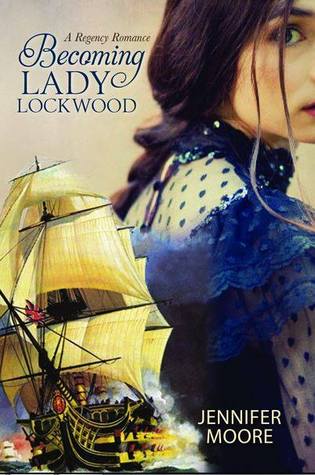
Becoming Lady Lockwood book review

Becoming Lady Lockwood

Becoming Lady Lockwood

by
 
Amelia Beckett is delighted to be a widow. Married by proxy to a man she'd never met, Amelia recognizes that a fortuitous entry into widowhood frees her from meddlesome chaperones and matchmakers. Heiress to her mother's sugar plantation in Jamaica, she happily anticipates working in a man's world, with the additional credibility of her new title: Lady Lockwood. But with the arrival of Captain Sir William Drake, her plans quickly go awry...

William has traversed the Atlantic with one purpose. If he cannot prove that Amelia's marriage to his brother was a fraud, she will be entitled to a sizeable portion of his family's estate. He is determined to return this duplicitous "Lady" to London for an official hearing, and he carries with him a letter that will ensure her cooperation...

Left with no choice, Amelia joins the captain on his return voyage to England, and the two quickly find that ship life does not allow for evasion. Amelia and William are ceaselessly thrown together, and amidst fierce storms and ocean battles, what began as antipathy seems to be evolving quite unexpectedly. But as they draw ever closer to their destination, will the impossibility of their circumstances shatter any hope of a future together


My Review: 5/10 and I think that's being generous.

This was okay for a first novel, but it was lacking any depth. Characters who have no flaws are just not interesting to me. I won't even get into the suspension of reality with one woman on a ship with 800 men for six weeks and the total lack of danger here. This book read like a to-do list; Amelia quickly undertakes winning over every single man on the ship and helping with all of the chores. We follow her around, charming everyone. She's Superwoman- a nurse/doctor, a seamstress and sailmaker, an expert at charting, a chef, a linguist, a spy, a soldier, etc. At the same time, she's always trembling and crying. It's supremely annoying. The romance was instantaneous and seemed based on attraction. The language and lack of propriety were not fitting for the time period.

*Spoilers*
I did not buy into the whole issue of discrediting his brother's marriage to Amelia so that the law would not prevent Captain Drake from marrying her; I knew that the Bible said something specifically about men marrying their brothers' widows to protect and provide for them, and I was sure the topic had been a plot in other books I'd read. I knew marriage between cousins was encouraged through the end of the 19th century. I assumed marriage between people not blood-related was acceptable, especially during the time period of the Napoleanic Wars (1803-1815). To my astonishment, after finishing the book, I looked it up and discovered how wrong I'd been. Apparently in 1560, the Church of England forbade marriage to any kind of kin, marriage or blood related, with the exception of cousins and some step-relations. Sibling's spouses stayed off limits until the marriage act in 1921 (http://www.genetic-genealogy.co.uk/Toc115570145.html). Fascinating.

Though it turns out that the facts here were sound, and I'm appreciative for learning something new, it doesn't change my dislike of the characters, their lack of mistakes, growth or relatability or the way I felt when I read it.

Sunday, June 14, 2015

The Midwife's Choice (At Home in Trinity #2) by Delia Parr book review

The Midwife's Choice (At Home in Trinity #2)

The Midwife's Choice (At Home in Trinity #2)

 
A Winning Combination of
Small-Town History and Sweet Romance

Martha Cade is a midwife in the town of Trinity in 1830s Pennsylvania. In a time when the traditional ways of medicine are constantly being questioned by new doctors fresh from medical school, Martha tries to balance her life's calling with the demands of her family. Recently reunited with her estranged seventeen-year-old daughter, Martha finds herself torn between guiding her child and allowing her to be an adult. And the town of Trinity itself is fraught with secrets: as a midwife, Martha knows which families are troubled, which wives are unhappy, and which husbands have crossed the line from discipline to abuse...

As Martha struggles with the conflicts of being a mother, a midwife, and a woman, she learns the greatest lessons of all--that hope can shine even in the darkest hours, and that faith has a way of making the impossible possible.


My Review: 9/10

I was so excited to get my hands on this sequel (and even more excited to hear from Bethany House that they are updating this book, to be re-released this winter, and there's even going to be a third!)!

It was every bit as lovely and thought provoking as the first book.

Martha has learned some hard lessons but when the time finally comes to put them to practice, it is very easy to slip into old habits and beliefs.

I loved that the lessons Martha learns in this book- humility, faith, judgment of character, trust in God's plans and provision, letting go, and embracing change, just to name a few- came about naturally, some in a rush and some over time. I particularly loved the way she realized that some of her burden hadn't been necessary and that she should have opened up to others, sharing her load with them; that her pride and independece wasn't worth the people and relationships she'd had to sacrifice, like with her children and love.

I was just as invested in each of the side stories and loved the clever resolutions at the end.

I have no complaints with the story; I gave it a 9 out of my personal taste. I would recommend it to fans of Lawana Blackwell's Gresham chronicles. It's not to the same tone or style, but I did notice a similar flavor.

 I can't wait for the third book!

Friday, June 12, 2015

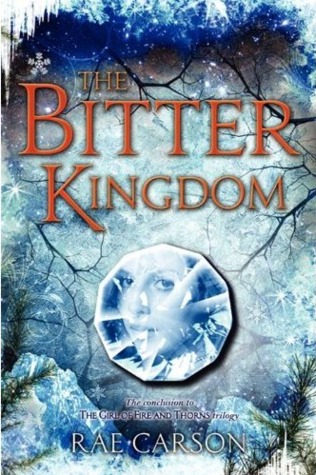
The Bitter Kingdom (Fire and Thorns #3) by Rae Carson book review


The Bitter Kingdom (Fire and Thorns, #3)The Bitter Kingdom (Fire and Thorns #3)

by
 
The champion must not waver.
The champion must not fear.
The gate of darkness closes.


Elisa is a fugitive.

Her enemies have stolen the man she loves, and they await her at the gate of darkness. Her country is on the brink of civil war, with her own soldiers ordered to kill her on sight.

Her Royal Majesty, Queen Lucero-Elisa né Riqueza de Vega, bearer of the Godstone, will lead her three loyal companions deep into the enemy's kingdom, a land of ice and snow and brutal magic, to rescue Hector and win back her throne. Her power grows with every step, and the shocking secrets she will uncover on this, her final journey, could change the course of history.

But that is not all. She has a larger destiny. She must become the champion the world has been waiting for.

Even of those who hate her most.


My Review: 8/10

This was a pretty good conclusion and easily the best book of the series.

My only strong complaint was that the characters didn't react very realistically in more traumatic situations. For example, after the death of an estranged loved one, Storm lets out some high pitched keening, and then is fine the following day. Elisa has an understandable identity crisis toward the end of the book, and after a day or two and a few words from another character, she adopts a new purpose and is fine.

Otherwise, a good read.

Wednesday, June 10, 2015

The Crown of Embers (Fire and Thorns #2) by Rae Carson book review

The Crown of Embers (Fire and Thorns, #2) The Crown of Embers (Fire and Thorns #2)

by
 
She does not know what awaits her at the enemy's gate.

Elisa is a hero.

She led her people to victory over a terrifying, sorcerous army. Her place as the country's ruler should be secure. But it isn't.

Her enemies come at her like ghosts in a dream, from foreign realms and even from within her own court. And her destiny as the chosen one has not yet been fulfilled.

To conquer the power she bears, once and for all, Elisa must follow a trial of long-forgotten—and forbidden—clues, from the deep, hidden catacombs of her own city to the treacherous seas. With her go a one-eyed spy, a traitor, and the man whom—despite everything—she is falling in love with.

If she's lucky, she will return from this journey. But there will be a cost.


My Review: 6/10

In some ways, the story got better and in some ways it got worse.


This is not a standalone novel; you'll want to read the previous book first. *Light SPOILERS ahead*

I understood that Elisa was trying to be diplomatic and civil, but she could do that while still being a strong leader. I mean, if she was critical of alejandro for being weak, I found it unbelievable that she would be so lily-livered about everything. For goodness sake, I expected her to rearrange the condes' priorities when they kept trying to mollycoddle her and kept being condescending, but Elisa disappointed.

It was better in that the food obsession finally stopped and the storyline was more interesting.

But what really kept me from engaging with the story was the religious aspect. It seemed like ms. Carson took everything from christianity and then twisted it. This is not a new concept, but the fact that she still called him God instead of a made up name for a fictional religion in a fantasy story troubled me. I mean, how many young adults have read the Bible to be able to pick out which parts are true and which parts are fiction? More likely, they'll recognize something they've heard before, pertaining to christianity, and therefore think the whole thing is scripture. But it's not. As I said, it's twisted and misapplied and the lessons and disconnect the heroine experiences as a result could confuse and mislead a young reader's faith. That left a really bad taste in my mouth. I will be careful who I recommend this to, if anyone.

Sunday, June 7, 2015

Death Row Chaplain book review


Death Row Chaplain: Unbelievable True Stories from America's Most Notorious Prison

Death Row Chaplain: Unbelievable True Stories from America's Most Notorious Prison

 
From a former criminal and now chaplain for the San Francisco 49ers and the Golden State Warriors, comes a riveting, behind-the-bars look at one of Americas most feared prisons: San Quentin. Reverend Earl Smith shares the most important lessons he's learned from years of helping inmates discover God's plan for them.

In 1983, twenty-seven-year-old Earl Smith arrived at San Quentin just like everyone thought he would. Labeled as a gang member and criminal from a young age, Smith was expected to do some time, but after a brush with death during a botched drug deal, Smith
's soul was saved and his life path was altered forever.

From that moment on, Smith knew God had an unusual mission for him, and he became the minister to the lost souls sitting on death row. For twenty-three years, Smith played chess with Charles Manson, negotiated truces between rival gangs, and bore witness to the final thoughts of many death row inmates. But most importantly, Smith helped the prisoners of San Quentin find redemption, hope, and to understand that it is still possible to find God
's grace and mercy from behind bars.

Edgy, insightful, and thought provoking, this book teaches us God
's grace can reach anyone—even the most desperate and lost—and that it's never too late to turn our lives around.


My Review: 8/10

Death Row Chaplain is a book about a man who is called out of drug-related crime and violence to become a chaplain at one of the most high security prisons in the country. His stories of men behind bars will challenge commonplace notions of those who commit crimes and what can become of them. It reminds us that God is powerful to work in all people, no matter our past.

Overall, this is a powerful testament to a God who acts on His own terms according to His own plans—a refreshing reminder that we often don’t get in typical American churches, with their carefully laid out plans and ministries.  The stories of inmates and the chaplain himself—plus athletes, once he ends up being a chaplain to professional San Francisco teams—will have you facing God’s grace, repentance, unrepentance, darkness, and the light that can conquer all. It presents to you the degree of misery that this world can so easily give, but also the hope that can shine in the most dismal places.

I have only two criticisms of the book.  Occasionally, I felt like the author was name-dropping, which may have just been my reading of it and not accurate of his intentions.  This was minorly irksome and didn’t happen most of the time.

The second criticism was in the composition and framing of the book.  I felt like I was going to dive into the prison ministry angle right away from the introduction, but instead we got a long tale of how the chaplain arrived where he was. This wouldn’t have bothered me at all if the setup of the book didn’t make me expect one thing forthcoming and get another.  Overall, I’m glad to see that tale. It just wasn’t what I was expecting.

Also, after the first chronological chapters of the chaplain’s life, the various chapters and topics of those chapters didn’t seem to be put together according to any noticeable organizational principle. Some sort of cohesive organization and transition for the chapters would have increased the delivery of the whole.

Overall though, I recommend this book. For subject matter alone, I would give it a 10/10, but as a book, I will give it an 8/10 due to the way it was written and organized.